Teaching Kids to Use “Be Able To”
Teaching kids to use "be able to" starts with one clear meaning: someone has skill or opportunity to act. Compare “I am able to swim” and “She is able to read this book.” Changing be marks past, present, or future ability. This guide explains the pattern, differences from can, key errors, and activities spanning early primary through the teenage years.
📥 Be Able To Practice Pack
Build accurate sentences about abilities in the present, past, and future
Leave your email — we'll send the PDF to your inbox.No spam — the PDF plus one short reminder. Unsubscribe anytime.
What Children Need to Understand First
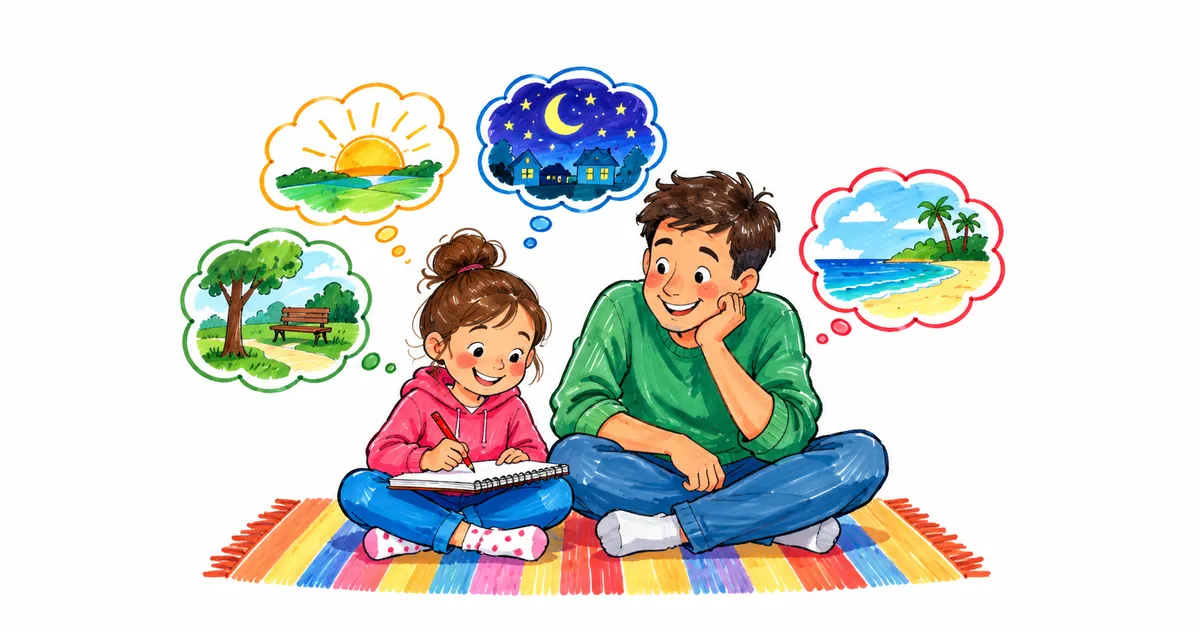
Explore ability before studying forms. Ask what children can do now, could do when younger, and may do later. Riding a bicycle, reading a story, cooking rice, or speaking two languages makes ability concrete.
Teaching kids to use "be able to" builds on subjects and be. In “We are able to help,” we names the subject, are matches it, and help names the action. Keep to before the action verb.
Ability can mean opportunity, not only permanent skill. “I am able to join the lesson today” describes an opportunity; “I am able to speak Polish” describes a skill.
How the Grammar Works
Use subject + be + able to + base verb. Be marks tense and matches its subject; action verb stays unchanged: “He is able to skate,” “They were able to finish,” and “You will be able to practise.”
Make negatives by adding not after be: “She is not able to come.” Make questions by placing be before the subject: “Are they able to hear us?” With will, ask: “Will your child be able to attend?”
Teaching kids to use "be able to" alongside can prevents confusion. Both express present ability, but some forms accept only be able to. Say “I want to be able to draw,” not “I want to can draw.”
Rules and Examples Across Time
Everyday present-tense speech usually favours can: “My brother can count to twenty.” “My brother is able to count to twenty” remains correct but sounds more formal or emphatic.
For past ability, could often describes an ongoing skill: “When he was five, he could recognise many animals.” One completed success needs was able to: “Although the puzzle was difficult, he was able to solve it.” Negative “could not” and “was not able to” forms can describe failure.
Teaching kids to use "be able to" should introduce future forms early. English has no will can; use “will be able to”: “After more practice, I will be able to play the whole song.” Keep predictions realistic instead of guaranteeing progress.
A Practical Teaching Sequence
Start with meaning, then form. Show three pictures or actions: something the child can do, cannot do, and hopes to do later. Ask for one sentence about each: “I am able to jump” or “Next year, I will be able to travel on my own.”
Keep one action while changing time: “She is able to read it,” “She was able to read it,” and “She will be able to read it.” Children notice changing be while able to read stays stable. Colour-code the subject, be, and base verb for visual learners.
Teaching kids to use "be able to" should match each learner’s stage. Younger children can practise spoken present forms with actions. School-age learners can compare past, present, and future. Older children can add infinitives and perfect forms: “I would like to be able to help” and “We have been able to complete the project.”
Common Mistakes and How to Correct Them
Children may combine can with be able to: “She can be able to sing.” Choose one structure: “She can sing” or “She is able to sing.” Never combine both within this pattern.
Children may omit to, change the main verb, or choose the wrong be. Correct “He is able swim” to “He is able to swim” and “They are able to played” to “They are able to play.” For “I is able to help,” review I am, he or she is, and we or they are.
When Teaching kids to use "be able to", correct one pattern element per attempt. Ask, “Which form of be matches they?” or “What comes after able?” Let your child repair, then repeat, the complete sentence.
Practice Activities
Short, repeated practice beats one long worksheet. Begin with controlled choices, continue with sentence changes, then finish with personal examples. Children can answer orally before writing.
Choose the Correct Form
Complete each sentence with am, is, are, was, were, or will be.
1. I ___ able to tie my shoes now.
2. They ___ able to finish the game yesterday.
3. Your child ___ able to open the file tomorrow.
4. We ___ able to hear the music from our room.
5. She ___ able to read short books last year.
Answers: 1. am; 2. were; 3. will be; 4. are; 5. was.
Check each subject against its matching form of be. Ask your learner to underline able to and circle the unchanged action verb.
Repair the Sentence
Find and correct one mistake in each sentence.
1. He can be able to skate.
2. We are able make lunch.
3. I is able to answer.
4. She will able to come later.
5. They were able to found the key.
Answers: 1. He can skate, or He is able to skate. 2. We are able to make lunch. 3. I am able to answer. 4. She will be able to come later. 5. They were able to find the key.
After correction, request personal sentences about home, school, hobbies, and languages. Independent answers reveal whether your child understands the grammar.
Change the Time
Rewrite “I am able to make a sandwich” in the past and future. Then change “They were able to solve the problem” into a present sentence and a negative sentence.
Possible answers: I was able to make a sandwich. I will be able to make a sandwich. They are able to solve the problem. They were not able to solve the problem.
When a word has several meanings or pronunciations, Cambridge Dictionary is a useful check before turning it into child-friendly examples.
Frequently Asked Questions
What Is the Difference Between “Can” and “Be Able To”?
Both describe present ability: “Your child can read” and “Your child is able to read.” Can sounds more natural in conversation. Use be able to after will, want to, and have: “Your child will be able to read it” or “Your child wants to be able to read it.”
When Should a Child Learn This Structure?
Introduce the present form after am, is, and are. No single age suits every learner. Younger children can practise through actions and pictures; older learners can compare tenses and place the phrase after other verbs. Teaching kids to use "be able to" works when examples use familiar grammar.
Should Children Use “Could” or “Was Able to” for the Past?
Use could for general past ability: “At seven, your child could read simple signs.” Use was able to for one successful action: “Your child was able to follow the directions and find the room.” Teach the contrast through examples, adding finer nuances later.
Why Is “Will Can” Incorrect?
Can is a modal verb, so English does not place it after will. For future ability, use will be able to: “Your child will be able to take part next week.” Remember: will takes be, while able to + verb stays unchanged.
How Can We Practise Without a Worksheet?
Ask: “What are you able to do now?”, “What were you able to do yesterday?”, and “What will you be able to do tomorrow?” Practise while preparing food, packing a school bag, or choosing a game. Request one accurate sentence, then a follow-up answer in another tense.
Want to see how these ideas work in a real lesson — try a LearnLink trial lesson.
Stay updated on our latest tips and resources by following us on Instagram LearnLink.